

What a clean ISO 20252 audit actually proves.
Most quality audits end with a list. The auditor walks the floor, reviews the records, sits with the team, and then hands over a tally: a nonconformity here, an observation there, an “opportunity for improvement” that everyone nods at and files away. The list is the point. It is, in a way, how an audit proves it did its job.
This year, our list was empty.
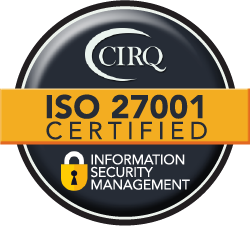
L&E Research completed its first ISO 20252:2019 surveillance audit with zero nonconformities and zero areas of note. Nothing flagged. Nothing to fix. The audit was conducted by CIRQ, the Insights Association’s accredited certification body for ISO 20252, and the auditor’s closing remark was longer than the list of findings: “I am very pleased and impressed with what I have seen. I have no concerns.”
That is a bigger deal than it sounds, and it is worth explaining why.
For anyone outside the certification weeds: ISO 20252 is the international quality standard for market, opinion, and social research, including insights and data analytics. It governs the full arc of a research project, from design and sampling through data collection, processing, analysis, and reporting, and it applies across qualitative and quantitative work alike. It was built by the global research industry through ISO, with input from professional bodies including Esomar, precisely so that research buyers would have a consistent benchmark for judging how rigorously the work behind a result was actually done.
Certification is not a logo you purchase. It is a system an auditor inspects, and then keeps inspecting.
That last part matters more than it first appears. Earning a certification is one thing. A surveillance audit, the check that happens between full recertification cycles, asks a harder question. Not “can you pass on your best day,” but “is this genuinely how you operate a year later, while running live work across multiple sectors in the middle of ongoing change?” One is a performance. The other is a habit.
And a clean surveillance audit is rare. Anyone who has sat through a decade of them will tell you that findings are nearly a given. A minor nonconformity or two becomes so routine it can start to feel like proof the auditor was paying attention. James Wilson, a CTO consultant with more than 20 years in the industry, said it best: “I’ve been involved with ISO surveillance audits for over 10 years, and I’ve never had one without some sort of finding. I just assumed that’s how the auditors prove their worth. Turns out not true, and the L&E team behind this did a truly amazing job.”
Not a binder.
It is tempting to credit the documentation, because documentation is what an audit appears to examine. But a clean audit is not really a verdict on your paperwork. It is a verdict on whether the behavior behind the paperwork is real. And behavior comes from people.
It is the account manager who spends the extra time understanding what a client actually needs before a scope is set. It is the recruiter who double-checks a response that does not quite add up. It is the project manager who catches a small detail and picks up the phone before it becomes a large problem. It is the data team member who validates the file one more time when the deadline says they could stop. And in at least one memorable case, it is the facility manager who spends hours shredding diapers, making sure nothing from a confidential study ever leaves the building. (Yes, that is a real thing. Quality work is not always glamorous work.)
None of those moments live in a process document. They are choices, made by individuals, usually when no one is auditing them. The standard describes what good looks like. People are what make it true.
For the insights professionals who buy research, this is the part worth sitting with. Process rigor is invisible in a proposal. You cannot see, on paper, whether a recruiter re-screened a borderline respondent or whether a data set was validated once or three times. You find out later, in the quality of what comes back: in whether the people in the room are who the screener promised they would be, and in whether the data holds up when you build a decision on top of it.
A certification does not guarantee that any single project will be flawless. No honest standard claims that. What it signals is that the organization behind the work has built quality into how it operates, rather than improvising it study by study. A clean surveillance audit is evidence that the benchmark is being met not just on the day of the test, but on the ordinary days in between. We are not going to pretend a clean audit means the work is never hard or never messy. Real research is chaotic by nature. Schedules compress, respondents cancel, scopes shift mid-field. The value of a quality system is not that it removes the chaos. It is that it holds under it.
That, more than the certificate on the wall, is what we are proud of. Not that we passed, but how we passed, and who made it possible. The standard was met by the same people who meet it every day when no auditor is watching.
If you want to talk about what research quality looks like in practice, not on a checklist, start a conversation with L&E Research.