
L&E Research
Participate
Client login
Bid request
  • Focus areas
    • L&E Health
    • L&E Consumer
    • L&E Legal
  • Facilities
    • All Facilities
    • Sensory Facilities
  • Capabilities
    • Participant Recruitment
    • Full-Service Research
    • Research Integrity
    • Research Infrastructure
  • Resources
  • Meet us
    • Meet us
    • Careers
  • Contact
  • Focus areas
    • L&E Health
    • L&E Consumer
    • L&E Legal
  • Facilities
    • All Facilities
    • Sensory Facilities
  • Capabilities
    • Participant Recruitment
    • Full-Service Research
    • Research Integrity
    • Research Infrastructure
  • Resources
  • Meet us
    • Meet us
    • Careers
  • Contact

Summary: 5th Annual Future Trends of Market Research and Technology

DWG Admin on November 4, 2022

Hand holding a sphere

For the 5th consecutive year, industry experts from Microsoft, Procter & Gamble, Greenbook, and L&E Research gathered to discuss the future trends of market research and technology.  The most recent GRIT report shared that the top two unmet needs reported by buyers is technology and sample, so it’s no coincidence that this year the primary topics of conversation were centered around technology and sample.

Technological innovations in qualtech have slowed in the past year as companies seem to be focusing on profitability over growth and innovation.  There has been a lot of consolidation within the MRtech ecosystem, combining platforms and solutions to offer more flexibility to users.  Providers are refining their platforms, making improvements that make research processes more user-friendly.  The tools are robust and can streamline efficiency in many research areas, but a comprehensive platform still seems to be out of reach as no single solution is all-inclusive.  While we are seeing evolution within qualtech, we are still not seeing revolution.

Technological advancements in the past few years alone have provided a plethora of solutions, but most are geared to remote and online qualitative research.  The industry continues to question if and when in-person research will return.  Facility-based research plummeted in 2020 due to stay-at-home orders, local mandates, and everyone’s hesitation to gather, and sadly continued to further decline in 2021.  We aren’t seeing focus group facility research volume that matches levels of 2019 and years prior, and we may never see those same levels return, but in-person research is definitively increasing and 2022 is showing a strong rebound.  Lenny Murphy of Greenbook shared that research has to be “Fit for purpose”.  Charlie Rader of Procter & Gamble echoed this sentiment by sharing, “There’s only so much you can represent on screen”.  In a nutshell, if it can be conducted remotely, then there is an abundance of technology that can support the chosen methodology; if however, your research requires use of senses (touch, taste, smell, etc.), it must be conducted face-to-face or via HUT.

Concerns with acquiring quality sample continues to plague researchers.  On the quantitative side, bots and fraud are highly problematic.  While the issue of fraud in research is not new, the global pandemic and corresponding increase in online research opportunities exacerbated an existing issue.  Some brand researchers have claimed that they are removing up to 80% of their collected quantitative data due to confirmed or suspected fraudulent activity.  L&E Research recently collaborated with CASE (Collaborate, Advocate, Spearhead, Educate) members to discuss some of the sample challenges researchers face in an in-depth webinar discussion.  Qualitative research is much more involved for participants, so while qualitative still experiences fraud, an experienced qualitative research recruitment company can help to mitigate most of this by administering a high-quality and targeted screener to secure the right panelists.

On the qualitative side, the struggle seems to be focused on supply and engagement.  Many research buyers have cited participant supply as another obstacle impeding research objectives.  It’s no coincidence that the top complaint qualitative recruiters hear from potential panelists is along the lines of, “I complete all these screeners, but I’m never selected to participate in a research study!”  As an industry, we must all take a strategic approach to building a more efficient process that keeps participants engaged in research; without their feedback and opinions, research will cease.  They are the lifeblood of our industry, and unfortunately, we haven’t done our due diligence to assure a positive experience for them.

In order to keep qualitative panelists engaged, they need to qualify to participate in research, and not simply fill out screeners.  Screeners must be developed to only include questions that would qualify or disqualify potential candidates, including necessary demographics.  If a question is only collecting information, save it to ask in the research session with those who do meet the qualifications.  Screeners should never be used to collect market data, and suppliers can reduce this practice by only providing screening data for those who are fully qualified and recruited for the study.  As an industry, we need to collaboratively bid a fond farewell to 10-page / 30-question screeners – this taxes participants and is damaging to the overall participant ecosystem.

Another execrable practice observed is the use of quantitative panels for high-incidence qualitative recruitment due to the lower price point.  While researchers can procure low-cost recruitment within quantitative panels, the research results may not elicit qualitative insights.  Qualitative research recruiters must build their member databases with a focus on ID-validated and articulate participants who have demonstrated a willingness to spend more time on an involved activity: some people simply aren’t built for qualitative research.  On the flip side, quantitative panels should be built for volume, and level of respondent engagement is less a factor since most obligations are brief and generally don’t require a great volume of elaborate open-ended answers.  High-incidence studies are used by many qualitative recruitment suppliers to “reward” members who have completed a multitude of screeners, but never seem to fit the qualifying criteria.  In order to contribute to the overarching health of the respondent pool that all qualitative recruitment suppliers share, if your research target is low incidence, or even specific product users, consider balancing your recruitment needs with a segment of high incidence recruits; product non-users may have an unique perspective to offer!

Part of ensuring respondent engagement is offering a hearty incentive amount.  “Cash is King”, and that holds true when considering panelist incentives.  A solid incentive not only encourages a strong response rate to screening outreach efforts (to provide a more diverse pool of candidates screened), but once secured, participants are more apt to complete the obligation to which they have committed.  When multi-million/billion dollar decisions are on the line, and consumer insights are part of the decision-making process, is the combination of an uber-cheap recruitment fee and an inequitable incentive a risk you want to take if it means the participants are not of the highest caliber?

Finally, a powerful and dynamic technology suite to manage the database is critical for recruitment suppliers to operate efficiently.  Software that can accurately track and retroactively update data points based on current screener information will reduce touchpoints to non-viable candidates, so they are completing fewer screeners, therefore eliminating frustration with our industry’s usual participant procurement process.  Our industry has made strides when it comes to database technology, but we still have a long way to go.  One day, perhaps recruitment can be conducted without the use of a screener, by using personas, or solely through technology, shifting away from the “ask” environment, and relying on observed data.

We hope you found this summary to be helpful!  If you didn’t register for this webinar you can watch this webinar in its entirety by clicking here.

Be on the lookout for our next webinar, which will be in January 2023.  If you can’t wait until then, you can always view our on-demand webinars.  Don’t forget to join our mailing list so you can keep up with what is happening at L&E!

Digital qual – the 51st state?

DWG Admin on November 4, 2022

New developments in online qualitative research put larger groups of respondents at your fingertips, but quality is still paramount

In times of constant change and qualitative data analysis is certainly experiencing constant change two things are vitally important.

It’s crucial to keep your eye on what is changing the new opportunities, technologies and ideas that are springing up. It’s also crucial to keep a place in your thinking for what has not changed the basic principles that consumer research rests on.

Fresh insight, representative recruitment, best operational practice, and data quality are no less important because methods are in flux. In fact, they’re more important.

They’re the thread of continuity which lets you know you’re delivering the best insight and outcomes for the companies you work with.

If new methods can’t help you improve on these benchmarks, it’s not worth spending your valuable budget on experimenting with them.

Fortunately, many new methods can, and there’s more activity at the cutting edge of online qualitative research than ever.

The Digital Evolution

Before we dive into that activity it’s worth a recap of the last few years to understand why and how digital qual is changing so much.

You’ll hear a lot of people say that COVID-19 changed everything. It would be truer to say that the Covid pandemic accelerated everything.

The pandemic put a temporary halt to traditional face-to-face methods and forced a large-scale shift to online qualitative research.

However, the pressure to embrace digital qual existed well before 2019. The core functions of online insight platforms were already tried-and-tested by 2019, and machine learning and qual-at-scale were developing fast.

What the pandemic changed more than anything was a rethink of the old qualitative dogma that digital research could never deliver the nuance and depth of face-to-face work.

As billions became more familiar and comfortable with video call technology it was obvious that remote video could actually deliver the kinds of deep, human communication great qualitative work relies on.

Hybrid Research Methods

So as hybrid work comes to be a working norm, it’s no surprise that hybrid qual is, too. Projects and even individual groups mix video call technology with face-to-face research, just like hybrid meetings do.

The watchwords here are reliability and smoothness. You can’t let technical glitches or tricky user interfaces break the flow of your meeting.

Platforms like Forsta, which specialize in this kind of hybrid online/face-to-face work also offer suites of analytics, editing and content management tools to draw the maximum insight from these groups.

Digital Platform Benefits for Qualitative Data Analysis

Most of the innovation in digital qualitative research is happening on purely online platforms, though. The range of start-ups and new offers in the sector is huge and difficult to sift through.

It’s all too easy to be wary of the wild claims being made. It can be useful to simplify things and think of digital qualitative platforms as offering three broad benefits.

  • They can save time, by automating or cutting out steps in the qual process that require a lot of work, like transcription, translation, curation, and editing.
  • They can produce deeper insights by helping users do parts of the process better. Often this involves machine learning or unstructured data analysis, or data integration with other non-qualitative insight sources like sales or CRM data.
  • Or they can create new insights by doing things it was simply not possible to do any more this is what the “qual-at-scale” sector, which creates custom qual data using hundreds or thousands of participants rather than dozens, is promising. It’s also where the predictive end of machine learning and AI fits in.

If a new provider or platform can credibly promise one or more of these, they’re worth looking at.

Automation Tools Save Time

Tools that automate research and save time are the least glamorous area though can often be the most useful. Platforms like Qualie specialize in large-scale video analysis, tagging and search, which have all improved hugely since the pandemic made front-facing video content the standard mode of online qual.

Improvements are still happening for instance algorithmic tools that can go beyond simply searching video data for relevant content while also editing it automatically to turn it into verbatim clips and quotes.

It’s now common for digital qual platforms to incorporate some level of machine learning and NLP (Natural Language Processing) to analyze data.

New start-ups specializing in this continue to launch, though the improvements in technology here are mostly ones of degree. In other words, new tools are becoming better at understanding language, uncovering themes, automatically coding data, and other tasks though these are incremental, not revolutionary leaps forward.

The thing to remember is that using AI as a qual researcher is always a kind of duet between you and the algorithm.

AI is still only as good as the human collaborators who train it and interpret its findings. Curiosity and open-mindedness are still the friends of great qual research, and false certainty is its enemy, something technology will never change.

Large-Scale Qualitative Data Analysis

Finally, the most exciting work in the digital qualitative research space is still being done with qualitative research at scale with tools like Remesh, which allow mass qualitative studies to happen.

Social media used to be described as a focus group with a million people, though as we now know, a million self-selecting people (half of whom are bots) may not be so useful.

A focus group of 1000 people, all able to respond and interact like a Twitch stream with analysis in real time that’s a kind of insight platform researchers have never had access to before.

For that kind of rapid analysis of unstructured data to have value, you need to make sure your inputs are gold-standard, and your qualitative research recruitment is second to none.

Advanced qualitative data analysis and recruitment expertise become more important than ever.

The Future of Research

New tools and ideas are reshaping the sector all the time. What impact, for instance, will AI art have on qualitative NPD research, as participants can bring new ideas to visual life simply by describing them?

The pace of change keeps increasing, and we live in revolutionary times for our industry. Though in revolutionary times, expertise, and a bedrock of quality matter more than ever.

5th Annual Future Trends of Market Research and Technology

DWG Admin on September 20, 2022

Hand holding a sphere

Join us for our 5th annual Future Trends of Market Research and Technology roundtable discussion with industry experts from L&E Research, P&G, Microsoft, and GreenBook. This conversation will delve into the future trends of market research and the role of technology in qualitative (and quantitative) research. Always our most popular webinar of the year, we will consider the evolving market research industry, what changes are on the horizon, potential challenges and new technology solutions. So, what can we expect, and where do we go from here? Join us for this exciting webinar to find out! During this webinar, we will discuss:

  • The future of market research, and what’s on the horizon
  • The Covid-19 Pandemic’s effect on market research
  • Issues experienced with participant quality and fraud

Are You Sabotaging Your Research?

DWG Admin on July 21, 2022

Fraudulent panelists have always plagued market research recruiters and panel providers, but the industry experienced an exponential uptick in fraud due to the Covid-19 pandemic: when the world navigated ways to live remotely, scammers followed suit and found a way to scam more effectively online. Researchers had to modify their data collection methodologies to reflect remote and online options during stay-at-home orders, and our industry adapted tremendously. However, increasing online research meant there were more opportunities for fraud.

In response to the growing incidence of data fraud, industry leaders and decision makers from leading brands gathered to create CASE (Collaborate, Advocate, Spearhead, Educate), with the goal of shining light on an issue that has been ignored in our industry for far too long.  By providing brands with education, they’ll be better equipped to understand the concessions of time, cost, and quality when making decisions for their business, and deciding what research is appropriate and how to best design it, considering those variables. CASE conducted the first of its kind, ground-breaking research study on panel fraud, and results were shared during a webinar hosted by The Insights Association in spring of 2022 (available on-demand: Online Sample Fraud: Causes, Costs & Cures, February 11, 2022).

The key to successful research and data collection is having the right recruiting firm on your side. The recruiting firm must be able to share what they are doing to exclude fraudulent panelists from participating in research.  Generally, you don’t need to know “how the sausage gets made”, however when it comes to panel validation practices that your recruiter has in place, you should ask questions and peek behind the curtain. Esomar published a paper in 2021 that has a list of 37 questions you can ask your recruiter to find out what they’re doing to validate their panel.  While not all questions will apply to all firms or projects, it’s a solid start and should provide some foundational education on what to ask or how to ask questions specific to the research that you will be conducting.  The goal isn’t to find a recruiter who can “check all the boxes”, but if they can speak coherently about their practices, and they are engaged and excited about the discussion, then you know they are implementing the processes necessary to mitigate data fraud. Your research partner should be taking a multi-faceted approach to their panel validation practices, using a combination of technological advancements and good old-fashioned human interaction.

L&E Research is renowned for three things: Nationwide recruiting, advanced technology, and industry leading client service. These skills are key to securing validated recruits who will contribute quality data for your research.  We have over 35 years of qualitative recruitment experience, with the majority of recruiting focused on in-person research, so validating identity is not new for Team L&E.  When we expanded our reach to accommodate remote, nationwide recruitment to better serve our client’s needs, we applied our tested respondent validation practices to a broader audience, so that we could continue to provide the same level quality participants for which we’re known. Online screening is convenient to both the panelist and our recruiting team, but this could invite fraud if the human element is removed, so at L&E Research, all recruits are confirmed with a phone call, conducted by a real human being.  When participating in research at an L&E facility or L&E’s Virtual Facility, a government identification is required. Our advanced technology solutions allow us to track which panelists have been ID and human validated, providing us with an accurate gauge on the health and quality of our 1+ million-member panel. As scammers are agile and adaptable, we too needed to modify our practices to cast a wider net on excluding scammers from not only participating in research, but from registering as a member of our respondent pool. Using a combination of geolocation routing and IP address tracking, we can exclude the majority of bots and click farms from gaining access to our member portal. Our technology provides us with the flexibility to only share project invitations with those who would potentially qualify, based on the 100+ data points we collect and track; this reduces the volume of “cheaters” who would falsify their responses just to get into a study.  We pride ourselves on our client service, but the same high-quality level of service is extended to our members in all levels of communication.  We know clear and concise communication makes the difference in the amount of effort, and therefore quality and depth of feedback, that a respondent will put into the task at hand. In those communications we include “anti-fraud” messaging, such as letting participants know that photo identification will be checked, and that rescreening calls will be conducted to confirm their responses haven’t changed. We know our process is effective; we also know that we must stay agile and stay diligent to adapt to a changing landscape.

Combatting fraud within our industry will take involvement from everyone: brands, agencies, consultants, and sample suppliers.  Because instances of fraud can wildly vary, the solution must be a collaborative effort, with dedication from all involved parties and open lines of communication.  It isn’t enough to attempt to combat fraud at the project level; if we want to continue to provide relevant insights, we must be willing to share best practices with our clients AND our competitors, so that data quality in the entire research ecosystem will improve.  With some accountability and creativity, recruitment providers can put processes into place to reduce bad data.

This post is based on a webinar, Stop Sabotaging Your Research! Why respondent quality matters and how to ensure data integrity. It’s available as part of our on-demand webinars series.

Be on the lookout for our next webinar, which will be in October 2022.  If you can’t wait until then, view our on-demand webinars. Don’t forget to join our mailing list so you can keep up with what is happening at L&E!
Stop Sabotaging Your Research! Why Respondent Quality Matters and How To Ensure Data Integrity

DWG Admin on June 28, 2022

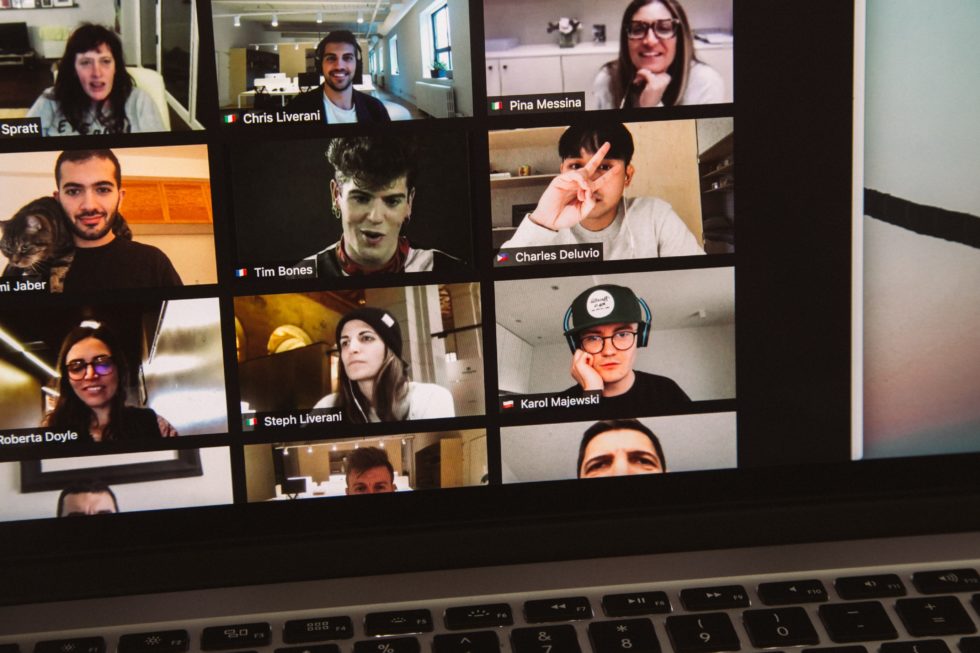
Have you ever completed a research project only to find your data is plagued with fraudulent responses? Poor data can result in money wasted on pointless research, faulty research conclusions, and the worst case scenario: product or campaign failures!

Representatives from L&E Research, Procter & Gamble, and Zinklar will discuss challenges the research industry faces when sourcing recruitment and data collection from suppliers. Our panel of fraud-busting experts includes: Tia Maurer, who brings over 20 years of research experience with P&G; Efrain Riberio, with more than 25 years of industry experience and an emphasis on respondent fraud, including advising roles to multiple research providers and industry associations; and L&E Research’s Kelli Hammock, who has close to 20 years of experience in qualitative recruiting; discussion to be led by L&E Research’s CEO, Brett Watkins.

During this webinar, we will discuss:

  • Why the industry has experienced an uptick in fraudulent data over the past few years, and how this experience differs within both quantitative and qualitative respondent pools
  • Qualitative controls that your panel provider should implement to ensure data integrity
  • Why companies should be utilizing quant/qual hybrid methodologies to collect data
  • Steps the industry can take to mitigate the incidence of bots and fraudulent panelists

L&E Research Technology Solutions presenting Aha! The Online Qual Platform

DWG Admin on December 9, 2021

Online platforms have changed qualitative research by offering respondents in-the-moment access through mobile and social media, making reach much more cost effective. Online qual platforms such as Aha! incorporate these tools on one simple platform to guarantee an improved respondent experience (which in turn means significantly improved insight). In this webinar you will learn more about how Aha! not only collects data, but also offers management and analysis tools to drive a compelling story to get the most out of the data.

Research on Research – L&E’s Journey to Understanding Our Research Participants

DWG Admin on December 8, 2021

Is great qualitative research recruiting important to you? We hear from clients that great recruiting ranks pretty high, which means quite a bit to L&E since we are passionate about recruitment. We are so passionate that our Research Design Engineer conducted research with our own research participant panel to learn more about what motivates and excites our participants. So we ask you again, is great qualitative research recruiting important to you? If so, download this white paper and learn about the research we’ve done to help deliver better recruitment solutions to you. To continue reading, download the report, by clicking here (no form to fill out).

The Latest in Qualitative Research Technology – Part 2

DWG Admin on December 7, 2021

New Tools for Better Insights

In part one of this blog, we discussed using AI to aggregate feedback and tap into data sources that may be too large or complex to analyze without AI. Yogi is emerging as a useful platform to identify and analyze data efficiently.

Yogi uses AI to aggregate, organize, and analyze data, which adds structure and meaning to reviews and ratings. Yogi power comes from combining consumer sentiment with topics of conversation to make it easy to identify likes, dislikes, competitors and challenges.

Live Conversations with 1,000 Participants

One of our newest partners, Remesh, allows customers to have a live conversation with audiences at a much larger scale, using AI to analyze and organize responses in real-time. In a live Remesh conversation, it’s possible to collect responses from up to 1,000 panelists in a single session.

The client develops the discussion guide for their exploratory qualitative research while L&E Research recruits the target audience to participate. The discussion guide can be customized using open-ended questions, polls, and even images or videos. The moderator selects pre-loaded questions from the discussion guide or can modify or write new questions in real time as the audience responses stream in, making the discussion fully customizable based on the responses received.

Quality Recruiting is Still Key

L&E Research taps into our panel of over one million US members to find the appropriate targets so customers can get the answers they need, and stakeholders are equipped to make decisions to solve their brand challenges.

Once the target audience has been secured, and the discussion guide has been developed, the Remesh session can be conducted. This is a fantastic way to brainstorm a topic without panelists influencing others opinions, so that a large variety of fresh perspectives are brought to the proverbial table for the client to review.

On the other hand, if idea sharing within the session is desired to stimulate ideas, that can be achieved – it’s all fully customizable! As new ideas are presented, and feedback is provided, the moderator can make alterations to the discussion and add or remove questions if changes are warranted. Remesh can collect quantitative and qualitative responses within a single session, cutting down on time and expenses when both need to be achieved. Due to its scalability, it can reduce moderation time as one session can collect responses from up to 1,000 panelists.

If further in-depth discussions are necessary to complete the qualitative analysis, individual or small group sessions can be facilitated through L&E Research’s Virtual Facility via a video conferencing platform. Finishing the research with a smaller scale discussion offers researchers the opportunity to answer any pending questions or tie up loose ends they may have.

Multiple Tech Solutions, One Vendor

This hypothetical, multi-phased approach to both identifying and solving a research problem using just three vendors could streamline and simplify a company’s process and save researcher time.  As Yogi and Remesh are both partners of L&E Research, this could all be done on one invoice though L&E, saving the finance and procurement departments time and resources as well.

6 Steps To Perfect Qual – Step 6: Maintaining Client Relationships

DWG Admin on December 7, 2021

A good marketing strategy is paramount in building client relationships, from generating new business to encouraging former clients to use your services again. So, how can you use your resources to effectively nurture your leads? The final white paper of our series explains the importance of building trusting relationships between your company and clients. Download this white paper to discover:

  • The importance of maintaining client relationships and impact on business
  • How to build impactful marketing strategies using email and social media
  • How to create engaging thought-leadership content to demonstrate industry expertise

Click here to download the white paper (no form to fill out!) More about the six steps to perfect qual series It’s qualitative research that digs deep to uncover the truth in consumer behavior. If the goal of qual is to explore rather than confirm, then true qualitative insight comes from asking the right questions, with the right people, and successfully sharing the journey they take you on. We know researchers walk a tightrope. Margins for error are narrow; even the smallest mistakes in a qualitative project can have huge impact on the client relationship and the project’s success. Our series of six white papers is designed to support you every step along the way in your project – to provide a guide to the key elements that will drive success and how we at L&E can help you. White Paper Series Downloads: Step 1: Qualitative Research Design Step 2: Qualitative Research Recruiting Step 3: Fieldwork and Data Collection Step 4: Qualitative Analysis Step 5: Insight Communication

Is your qualitative research helpful or harmful?

DWG Admin on December 7, 2021

Recent trends in the market research industry show that more and more researchers are looking to quantitative panels to complete qualitative research. The hope is that quant panels will reduce costs and save time, but are they actually faster and cheaper, and what is the quality of the data they generate? With new research by Insight and Measurement’s David F. Harris and L&E’s Renee Wyckoff, and an in-depth interview with Procter & Gamble’s Tia Maurer, our paper proves that completing qual research without a specialized company poses a serious threat to data quality. Click here to get the scoop on our research and findings (no form to fill out!)

Posts pagination

Previous 1 … 4 5 6 … 8 Next
L&E Research

Focus areas

  • L&E Health
  • L&E Consumer
  • L&E Legal
  • CondUX.io

Capabilities

  • Participant Recruitment
  • Full-Service Research
  • Research Integrity
  • Research Infrastructure

Facilities

  • Charlotte
  • Chicago
  • Cincinnati
  • Columbus
  • Denver
  • New York City
  • Orlando
  • Raleigh
  • Tampa

Keep in touch

Subscribe to our newsletter

Linkedin-in X-twitter Youtube
  • © L&E Research
  • PRIVACY