L&E Research
Participate
Client login
Bid request
  • Focus areas
    • L&E Health
    • L&E Consumer
    • L&E Legal
  • Facilities
    • All Facilities
    • Sensory Facilities
  • Capabilities
    • Participant Recruitment
    • Full-Service Research
    • Research Integrity
    • Research Infrastructure
  • Resources
  • Meet us
    • Meet us
    • Careers
  • Contact
  • Focus areas
    • L&E Health
    • L&E Consumer
    • L&E Legal
  • Facilities
    • All Facilities
    • Sensory Facilities
  • Capabilities
    • Participant Recruitment
    • Full-Service Research
    • Research Integrity
    • Research Infrastructure
  • Resources
  • Meet us
    • Meet us
    • Careers
  • Contact

L&E Research Technology Solutions Presenting Focus Forward

DWG Admin on December 6, 2021

Technologies used in onsite qualitative research are improving constantly, but how do you know what’s new, what’s improved and what’s to come? We’ll explore the latest in camera and streaming technology, how online tools can help manage projects and the latest improvements in solutions like transcriptions. In this webinar you will learn how these tools can help you meet the holy triangle of what clients want:  faster results, better quality, all at lower costs.

L&E Announces The Launch of Virtual Facility and Reopening of Manhattan Location

DWG Admin on May 18, 2021

May 18, 2021

Raleigh, NC – May 18, 2021 – L&E Research is pleased to announce the launch of its Virtual Facility online solution, as well as the reopening of its NYC location in Midtown Manhattan. Virtual Facility provides an option to host, record, and live stream research virtually, without the need for a physical location or in-person participation. Virtual Facility can be used for focus groups, in-depth interviews, jury research using breakout rooms, HUT research for product testing and more.

“We are really excited to get both of these big projects finally rolling and offered to the market research and UX industries” stated Brett Watkins, CEO and Founder of L&E Research. “Virtual Facility is really a combination of software innovation and can-do spirit by our team to deliver creative solutions to researchers,” said Watkins.

With Virtual Facility, live hosting is provided for the duration of the session to troubleshoot and manage late recruits, update the moderator, and let participants into the session. A variety of platforms are available including Zoom, Adobe Connect, MS Teams, WebEx and more, all of which are secured via a waiting room. Clients can observe and chat with each other during the session. L&E Research will be hosting a webinar on Virtual Facility and it’s suite of solutions on June 23 at 12:00PM EST for those interested in learning more.

“Our clients were seeking help to overcome the challenges presented by the pandemic, and our team listened and guided us to design solutions that clients wanted. Adding video and project management capabilities into our proprietary technology solutions, we’ve been able to help clients engage participants in a variety of ways.” Watkins added, “We’ve also partnered with cutting edge technologies to deliver tools one can’t get from any other company. We’re excited to enable U.S. clients to engage consumers, patients and health care professionals pretty much anywhere, anytime, all in one secure location.”

In addition, L&E Research also announced the opening of their New York City office in Midtown Manhattan. Located on the Club Row on 44th Street, this facility offers five focus suites with one of the largest focus group suites in NYC, perfect for large audience research such as mock trials or theater room set up.

“We actually acquired this company in March of 2020, but the pandemic caused a series of complications that prevented us from opening until now” stated Watkins. “In-person research is getting rolling again, and New York City announced they intend to remove all restrictions on July 1, so it’s the perfect time to let clients know we’re here in Manhattan, along with our network of locations throughout the U.S., to help them discover the magic of in-person qualitative research again!”

Click here to learn more about L&E’s Virtual Facility, or click here to learn more about the NYC facility. You can also call L&E Research at 1-877-344-1574 for more information.

AnchorAbout L&E Research

L&E Research is the leading qualitative research company in the U.S., dedicated to making connections with our community, to facilitate connecting our clients with our community, enabling us to give back to our communities. Services include recruitment, focus group facilities, and a host of qualitative technology solutions, allowing our clients to connect with their customers anywhere, anytime. L&E has been named to the Inc. 5000 list of fastest growing private companies in the U.S. multiple times. In addition to a virtual presence nationwide utilizing proprietary technology solutions to connect clients with customers throughout the U.S., L&E has facilities and/or support services in Austin, TX; Charlotte, NC; Cincinnati, OH; Columbus, OH; Denver, CO; Kansas City, MO; Minneapolis, MN; New York City, NY; Raleigh, NC; San Francisco – East Bay Area, CA; St. Louis, MO and Tampa, FL.

AnchorContact

Kelli Hammock

720.370.3423

L&E Research

www.leresearch.com

3rd Annual Future Trends of Market Research and Technology

DWG Admin on September 23, 2020

Join us for our most popular webinar of the year at your own convenience (via on-demand) as we dive into discussion of the future trends of market research and the role of technology in qualitative (and quantitative) research. We will also discuss what the new normal is starting to look like for the market research world and what key brands are doing today to continue on with research. We’ve added to our panel of guest speakers this year and will have Barry Jennings from Microsoft and Sarah Snudden from AYTM to provide additional insights into the future of qual and quant technology. The dynamic duo from years past, Charlie Rader of P&G and Lenny Murphy of GreenBook will be part of our lively discussion as well.

L&E Blog Series: Working in a Virtual Environment – Metrics: The Key To Any Business (Especially When Your Team Works From Home!)

DWG Admin on July 20, 2020

As so many are struggling with their businesses in this new reality we call COVID, we have all been confronted with the reality that the world has changed and a crisis is upon us.  I wanted to share a chapter from a friend who has written a series of books on the subject of entrepreneurship.  Called the “Decision Series,” Randy Nelson has authored two books (with two more on the way) on helping us navigate the business owner cycle.  Here’s a chapter on crisis leadership, and what Randy learned from his time as submarine XO and later successful exit of two companies on how to deal with crisis.

I highly recommend his books for all business owners out there, especially his “Second Decision” on operating your business well. If you read Randy’s chapter or tuned in from my last post on the strategic essentials of working from home, we covered communication and how essential it is for a successful transition to at home work, as an element of the broader need for great leadership for successful outcomes.  Vision, strategy and culture are all critical components of leadership as well, but these are items that really must come from the heart of the leadership of one’s business or division.  Further, countless books have been written on these subjects that could cover these topics far better than I (see Simon Sinek’s “Start with Why,” Jim Collins’ “Good to Great” on strategy and culture and overall leadership, “The 17 indisputable laws of Teamwork” by Thomas Maxwell, and many more).  All of them are well worth the read.

But the one facet of leadership, and one I see most lacking in many businesses, that is particularly crucial when your workforce is more virtual (and covered really well in Randy’s book), is metrics.  As one CEO friend told me years ago, when he asked what my key metrics were and I didn’t have a good answer:

“Brett, if you don’t know the metrics of your business, you’ll never know what makes it successful.  Talking financials only tells part of the story:  what items [that are measurable] that drive those financials are the keys to your business.”

Too often I hear Key Performance Indicators (KPIs) referenced by others as financials.  Profits, revenue, cash flow, these are all very important, but are often data that only you and your CFO or Finance Officer know. If you want to share that data with your employees, I strongly encourage it, but that too will take time and a lot of process.  Jack Stack’s “Great Game of Business” and Geno Wickman’s “Traction” are great reads and systems to consider when going down that path.  They also only tell the outcome, they don’t share how you got there.  Knowing what causes your business to generate profits (revenue is nice, but without profits it’s vanity) is what will lead to high performing teams, as you build out the metrics that enable each teammate to understand where they fit into the bigger company picture.

The ability to know what number(s) each of your teammates should be looking at is the first crucial step in creating a culture of accountability.  The Society of Human Resource Management (SHRM) has regularly published survey results that show employees seek, in this general order:

  1. The ability to influence their working world;
  2. Clear expectations as to what is expected of them;
  3. Being valued and appreciated;
  4. Fair compensation.

Notice compensation is last. Yes, everyone wants to paid well, but so long as their compensation plan is fair, employees really want to know how will the game be played, what part of the game are they expected to play/influence, and what does winning look like?  I like to compare it to games because most all of us grew up playing games of some kind.  Sports, cards, Monopoly, we all know the rules, and we all know what winning looks like.

I find these four elements very intertwined and critical if you are to create an accountable culture.  To me, it starts with #2:  clear expectations.  To have clear expectations, one has to have data, especially when your people are working from home, when all you have is the ability to see the final work product or financial outcomes.  Simply put, your teammates crave objective analysis, because when it is clear to them not only what is expected of them, but also what they are involved in defining, together you both can determine HOW to accomplish it. This also addresses #1, their ability to influence, and even #3 being valued and appreciated, as you will find it easier to value them and show appreciation if you can objectively see they’re helping you make a positive difference.

Once employees feel you both are on the same page, you will begin establishing trust, which is essential between business leaders and their employees to achieve success.  You will get a lot less “why are we doing this?” if they understand what drives the business, and how what they do influences it. This of course gets back to communication we discussed earlier, but you’ll find you spend a lot less time explaining things as you establish trust.  Telling your teammates “Trust me!” is something I found never worked!

Clear expectations thus, derive from metrics that allow you to create a scorecard between you and your employee.  Taking your goals for the year, you can reverse engineer your business to determine what each departments scorecard will look like, and in turn how you will develop the KPIs of each employee within those departments.

If you’re thinking “Yeah sure, it’s so simple!,” you’re right: it’s not.  Considerable thought needs to go into your metrics as a company and what’s driving your success (or what needs to change to make it successful).  From my experience, you’re likely to make a few mistakes as to what you’re measuring, and change the metrics up.  But good news:  my experience is when people see you trying to figure it out and working smart to enable both the company and employees to be successful, they’ll be a whole lot more willing to put up with these mistakes and help solve the problem to make the company successful.

As we all adapt and reimagine our businesses in this new reality, metrics and communication will be crucial as companies consider being more home-based.  In addition to Randy’s Decision Series, I also highly recommend “Traction” by Geno Wickman, as you consider how to thrive in the months ahead and put better metrics and communication systems in place.  If I had one thought to close, it would be don’t let the productivity of your teammates these past few months lull you into a sense of false security.  Many companies have reported seeing their teammates productivity equal to, or increased, during this COVID crisis.  Seeing the job market run high with unemployment and the quarantines forcing people to stay home may be creating “false positives” in productivity.  Make sure your metrics are strong, and you’re constantly evaluating how you can communicate  better in order to ensure everyone in your company is on the same page.

L&E Blog Series: Working in a Virtual Environment – Communication: Part 2

DWG Admin on April 23, 2020

As a follow up to my post last week about communication, I discussed the 5 key tools that we used to help get everyone on the same page to become a remote workforce.  In addition to those, I thought it would be useful to share some of the software/tech tools we use at L&E. So here they are, a few tools we use in our daily work, plus a few things we do as a company throughout the year to enhance our communication with one another.

  • Video Meetings – We hold all of our meetings via video and a good HD webcam on each employee’s laptop enables us to do so. Whether the video platform is through 8×8, Zoom or GoToMeeting, video provides a human connection and dynamic that can’t be achieved through phone/conference calls. We are able to see the background of one another’s homes (and the occasional pet, spouse or child ). This keeps things real, we are human and we LIKE seeing each other’s lives. I have found for new employees this also gives them more familiarity with their new colleagues and helps them get to know one another better before they have the chance to meet in-person.
  • Online Chat Tool – We use G Suite and Google Hangouts is a chat feature within Gmail. Having a chat function available makes it easy to get a quick answer without having to worry if someone is busy, or if you missed a call. Furthermore, it reduces the amount of congestion in inboxes and is a great internal communication tool.
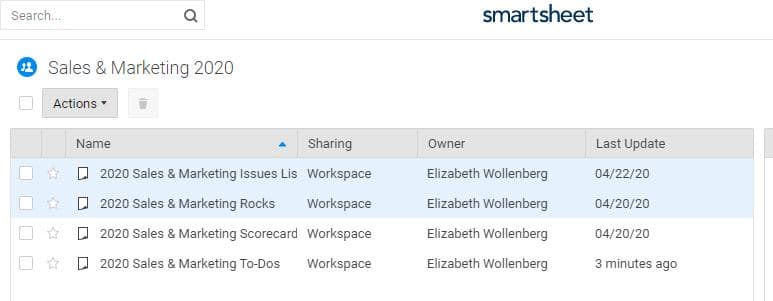
  • Shared System – I mentioned Smartsheet specifically in the last blog post. It’s a shared workspace tool that everyone can access and make changes to in real time. It solves the problem of not having the most current document that may have been shared or emailed back and forth multiple times. It’s where we set our goals and metrics, discuss issues at hand and create our to-do’s. It’s something we come back to in each meeting to guide us and help us so that we are held accountable in actions following every meeting.

Example of Smartsheet workspace below:

Smartsheet workspace

  • Small Team Meetings – Keeping our team meetings smaller helps us stay focused on the goals/metrics of the departments we work within, makes it easier to bond in a smaller group setting and for the most part keeps our meetings shorter and within our desired time limits. We have cross-departmental meetings (which are small as well), but these are with each department head vs. the whole team. This makes good use of each team’s time and when there is something pertinent that needs to be passed down from the department leader they are then able to regroup in their own small teams.
  • Polaris Learning System – This is an online learning academy that our team has been utilizing since 2017. While you may wonder how this is part of communication, there are courses in the following chapters (and yes, communication is one of the courses!): Self Development, Communication Skills, Time Management, Decision-Making Skills, Goal Achievement and Leadership & Management. You can check out the Polaris website and learn more about the coursework offered with this sample course module.

L&E Blog Series: Working in a Virtual Environment – Communication

DWG Admin on April 15, 2020

As many on our team have written about tricks to help your day-to-day strategy on working from home, in this blog post –  I’d like to talk more about the overall company and its approach to working as a team.  So for those leading teams, or even companies and are dealing with a virtual workforce for the first time in this new “normal,” I’m talking to you!

For many, this rapid transition from working in an office to working at home has led to a lot of challenges.  I am sure everyone is quickly realizing that the things that were likely taken for granted when everyone was in one space are now “oh wow” moments that have presented new challenges to leaders as to how to get their teams to continue to be productive, as well as measuring effectiveness.

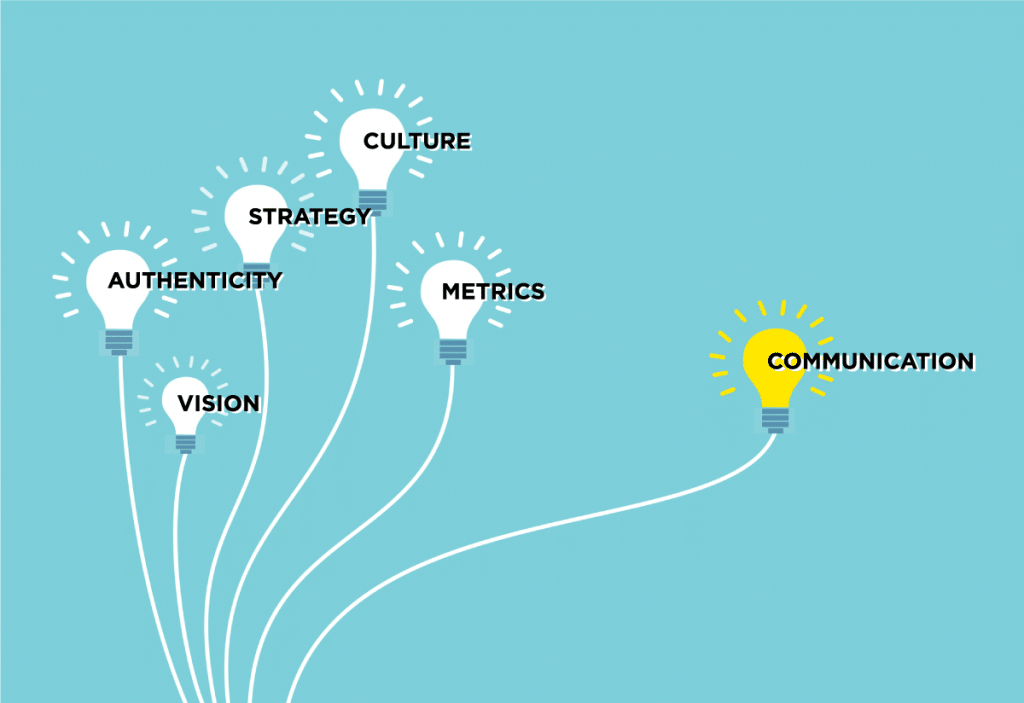
Prior to diving deeper into the challenges of the virtual workforce and building effective teams virtually, it’s important to highlight what all businesses must have throughout the organization to be successful:  leadership.  It took me years (and some embarrassing experiences) to realize leadership wasn’t speeches or “larger than life” personalities.  Leadership is action that people commit to daily in order to inspire and comfort others, and this results in people’s comfort following their lead.  While there are varied attributes, I have ascribed to the six following elements of leadership:

  • Authenticity: I’ve been around orators, and I’ve been around people that might have said five words in a meeting.  Some spoke with their hands, and some looked like they barely had a pulse.  Leaders come in all different forms, but the key is authenticity, being true to themselves.
  • Vision: knowing where one wants to go, what goals are to be set out and accomplished.
  • Strategy: how do we intend to get there?  What’s the plan?
  • Culture: what are the common beliefs we all agree are the principles of our team?  Many often use words like “integrity” or “compassion” or “teamwork”:  noble principles, but don’t forget there was no integrity witnessed in “Wolf of Wall Street,” although they were a tightly bonded (and highly successful) team.  And Blackbeard likely had little compassion for non-performers or those disloyal to him and his ship, but the loyalty of his men was notorious in those times.  Culture is the environment that teams agree to embrace, and not tolerate from others that don’t embrace it.  It’s also a big part of the language, the common reference everyone on the team understands.
  • Metrics: humans perform as a result of the rewards they will receive for achieving those measures (and rewards come in many forms and aren’t always financial). Our ability to agree on what those rewards will be, and what each side (employer and employee) must do in order to earn those rewards, how to measure what a “great job” means, is critical.

Finally, the one I will focus on in this post is communication.  If your team does not know what the vision is, the plan to get there, what we all agree are the rules and expectations, and how we all know when the journey will be successful…you don’t have anything.  Simply put, ensuring the team knows what is going on is crucial, but probably the least thought out and most poorly executed within companies.

As a backdrop, when L&E made its transition to a virtual workforce in 2009, we shortly thereafter made our first expansion in Tampa, Florida.  There were two main employees that were added to the team, and roughly 10 employees overall to our existing team of 30.  My biggest surprise was discovering how often the team was having “miscommunications.”  Balls were regularly getting dropped. Misinformation was as common as accurate information. The success of our new office was genuinely in jeopardy.  Clearly, we had some problems to solve if we were going to succeed.

Fortunately, over 400 employees later, we did figure it out.  For effective communications, we implemented 5 key tools to help us get everyone on the same page.

  1. Meetings: first off, let’s be clear that meetings are useless unless they are effective. You can learn all you want about effective meetings from “Traction” by Geno Wickman.  I can’t endorse his business operating system highly enough.  It’s a short read, and overall not an overly costly system to follow, even with outside help.  But I’ll just share that the keys to effective meetings break down into 4 parts:  they must have an agenda, they must require people are engaged (e.g. not doing email while they are meeting), they must have action items that result from the meetings (who’s going to do it, who’s responsible for it, and when’s it going to happen) and finally, they require a leader who is going to follow through and hold people accountable to those action items.  If something is more intense, you may require greater meeting frequency, but for typical department operations, once a week I find works well, and must include what Wickman calls “cascading messages”:  data that should either go outside the meeting to others, or sometimes messages that should be conveyed to the team prior to meeting start (which would be part of the agenda).
  2. Company surveys: good communication isn’t just about telling people things; in fact, it is more about listening to what others have to say.  Sometimes it’s to better form strategies; sometimes it’s to get buy in, and sometimes, it’s because people need to talk, and a leader’s job is to listen, and to empathize with your teammate. But I find an annual survey (and I also like a short “pulse check” 6 months later) of how happy your team is, and finding out what they think would make the company better, is an instrumental tool in your listening tool kit. In time, assuming companies are acting on the survey, teammates will trust their leaders more.  That leads to teammates thinking about how to make the company better more regularly:  they’ll take ownership of the business and its outcomes. This goes a long way to having an engaged team, one that cares about the business and its success.
  3. Use a commonly accessible system where information can be stored. Don’t think emails out to the team are going to be effective forms of communication!  Just like your inbox, your teammates email box is full of…emails!  They get deleted, they get overlooked and sometimes even more crippling, they can lead to “reply all” conversations that don’t solve problems (in fact they usually create more). Email is the most overused, and most abused, and least effective, method of communication.  Unless it’s a short response or confirmation of action, email should always be avoided.

Instead, use systems that can document and keep permanent record of the goals sought after.  There are considerable systems online out there one can use to track and post content for teams to reference. Google docs and spreadsheets, Smartsheets, Microsoft has a full suite just to name a few, the point is to have a place where teammates can go when questions arise, what they should reference.  And a “Wickman” rule I really like: document 20% that covers 80% of your business.  But remember unlike your in-office days, no one can knock on your door to ask a quick question, and that absence of convenience (beyond the normal stress of what is COVID-19) is likely to result in more people not being productive. And if I can implore you to remember one thing, it is this:  your team is stressed, and productivity is not going to be normal (both the new environment and stress): be patient!  People will settle in, but it will take time.

  1. Regular “broadcasts.” Leverage tools like Zoom or GoToMeeting or others and once a quarter, talk to your team and answer their questions.  Tell them what’s going on, share the vision, the strategy, emphasize the culture, and then answer questions. I also like to visit teams regularly. Despite having nearly a dozen offices, I visit them all at least twice a year. But with the current crisis, having the team SEE you, HEAR you, and watch you respond and answer their questions demonstrates your willingness to share, to listen and to engage. Your team needs that, which leads to my 5th communication key.
  2. Repeat yourself…a lot! A famous quote from a Fortune 500 CEO when asked what he spends most of his day doing, his answer was “repeating myself.” Remember what you said probably only a few people heard. Whether it was because they’d never heard you say it before, or because humans generally need several impressions for the message to stick, repeating yourself becomes an important strategy. And a hard lesson I had to learn: be consistent. I’d try to say the same thing, but use different words or analogies, convoluting the message (still struggle with this actually, working to be better!). Saying it the same way, focusing on the same key points (3 is recommended), reinforcing the message to everyone consistently and being concise is most effective in getting people on the same page and, working together.

And if after reading this you’re thinking “I don’t run my company or my department, so what can I do?”  remember that you can be the biggest influencer of policy, as you are a member of the team.  All of you have good leaders where you work: those leaders will not only need your support during this harrowing time, they’ll also be listening for good ideas that they can implement. This gets back to good communication: good leaders want to hear your opinions, just make sure you offer them the right way.  That means you aren’t telling them, you’re sharing what you are seeing, how you care and want to see the company succeed and demonstrating respect for their position.  In other words, you aren’t complaining, you’re problem solving.  And another favorite word of mine, you’re being PROACTIVE.  You want to help and you’re volunteering to help implement whatever strategies leadership decides to implement. As Mark Cuban says: “[People] who reduce my stress, become invaluable to me!”

One of the things I’m most proud of at L&E are our employee happiness measures that show over 4 in 5 employees would highly recommend working at L&E to friends and colleagues (as a comparison, most companies in the services industry according to the Society of Human Resource Management are in the 50s to low 60s).  Good communication is critical to that end. And happy teammates are productive ones that embrace the company’s best interests. I hope this content has been helpful in creating a more effective virtual team in your organization.

Next time I’ll share what we have learned at L&E about metrics, and how to create measures that allow you and your teams to operative effectively, regardless of your location.

L&E Blog Series: Working in a Virtual Environment – Stress Relief

DWG Admin on April 7, 2020

We are in week #3 of our blog series, hopefully you are settling into some sort of routine to help you make your work day a little bit more manageable. Our focus this week is stress relief because let’s be honest, the amount of stress and anxiety in our lives is quite high right now. We know you aren’t going to meditate on top of a mountain (unless you live in the mountains!) like the stock photo we used for this blog post, but this is a fantastic visualization tool and/or image to look at daily. Some of us have probably never dealt with this kind of uncertainty so we wanted to share a couple “de-stresser” tips from our employees.

Take a few deep breaths and read below to learn what helps L&E employees relieve stress:

  • Watch a funny or inspiring clip from a favorite TV show, a good laugh always helps us de-stress. A favorite of ours is from the wonderful John Krasinski : SGN Watch this week’s clip – Scott Johnson, St. Louis Client Services Manager
  • And who doesn’t need more than one clip to brighten their day, here is another favorite from our team. This clip was sent over from Tyler Johnson, Client Relationship Manager
  • Connect with your teammates regularly, it always helps talking it out. Specifically during these times, utilize video technology to stay in touch! – April Leonard, Medical Project Director
  • Make your space extra comfortable – buy a plant so you have some greenery on your desk and turn on an essential oil diffuser (lavender works as a natural anxiety reliever). You can control the atmosphere so try to make it as stress free as possible! – Kaitlin Plave, Account Manager
  • Take a lunch break:  One of my favorite WFH benefits is the freedom to prepare lunch at lunchtime (as opposed to packing a lunch before going to the office), or simply heat up some leftovers.  I also try to walk my dogs during this break time – a midday “fresh air” break is very relaxing and gets me on track to finish the day.  The important part is to simply get up and take a break! – Kelli Hammock, Senior Client Solutions Manager
  • In addition to taking some time daily to laugh (or cry), exercise is always a great stress reducer to help balance body and mind. – Brett Watkins, CEO

Be on the lookout for our next blog post in this series coming next week!

L&E Blog Series: Working in a Virtual Environment – Establishing a Routine

DWG Admin on March 31, 2020

Kicking off week #2 of our blog series, were you able to get your workspace set up last week? This week we will focus on establishing a routine. Whether you are a consistent schedule person or not, you probably had some sort of routine prior to this new way of life. Now everything is out of sorts and you may be dealing with the new challenges of working from home too. Working from home is like a puzzle, you need all the right pieces for everything to come together. One of those major puzzle pieces is establishing a routine in your new work environment, which also happens to be your home.

Check out some tips below from some of our L&E employees on how establishing a good routine can make all the difference in your WFH set up. 

  • Wake up at the same time every day! Whether it’s a morning I would normally go to the gym or not, I wake up at the same time each day. This helps me in establishing a good routine and also helps with falling asleep easier at night (bonus tip: go to bed at the same time each night). Something else I do each morning and evening is walk my dogs. As anyone with dogs probably understands you can’t mess up the schedule! Dogs thrive with an established routine, as you probably will too. – Elizabeth Wollenberg, Marketing Manager
  • I’ve worked from home in the past, even though I work regularly in an office now. For me, I kept a regular schedule, just like now… up same time every morning, gym, dress for work (business casual, even if I wasn’t going to be seen that day), then off to my home office.  – David Mize, Client Services Manager, Columbus
    Facilities Operations Manager
  • I always end my day with a list of priorities for the next day. This list sits on my keyboard so I can tackle my day in an organized manner!  Lists are good!  – Tracy Hyder, Senior Project Manager
  • Pro tip- pick out a good music station (if you can listen to music while you work). Some of our favorite stations include: Thomas Newman Radio, Coffee Shop Radio, Stephen Stills Radio and Meditation Radio.

Be on the lookout for our next blog post in this series coming next week!

L&E Blog Series: Working in a Virtual Environment – Your Workspace

DWG Admin on March 24, 2020

In this blog post series, we hope to help you if you are new to the virtual workforce and provide some tips that will help you adjust to remote working. Thanks to our proprietary cloud-based technology that is unique to L&E (it operates our entire business) the vast majority of our recruiting, project management and management team are virtually based and have been for well over a decade now. Each week we will share advice from our own employees in what helps them work remotely.

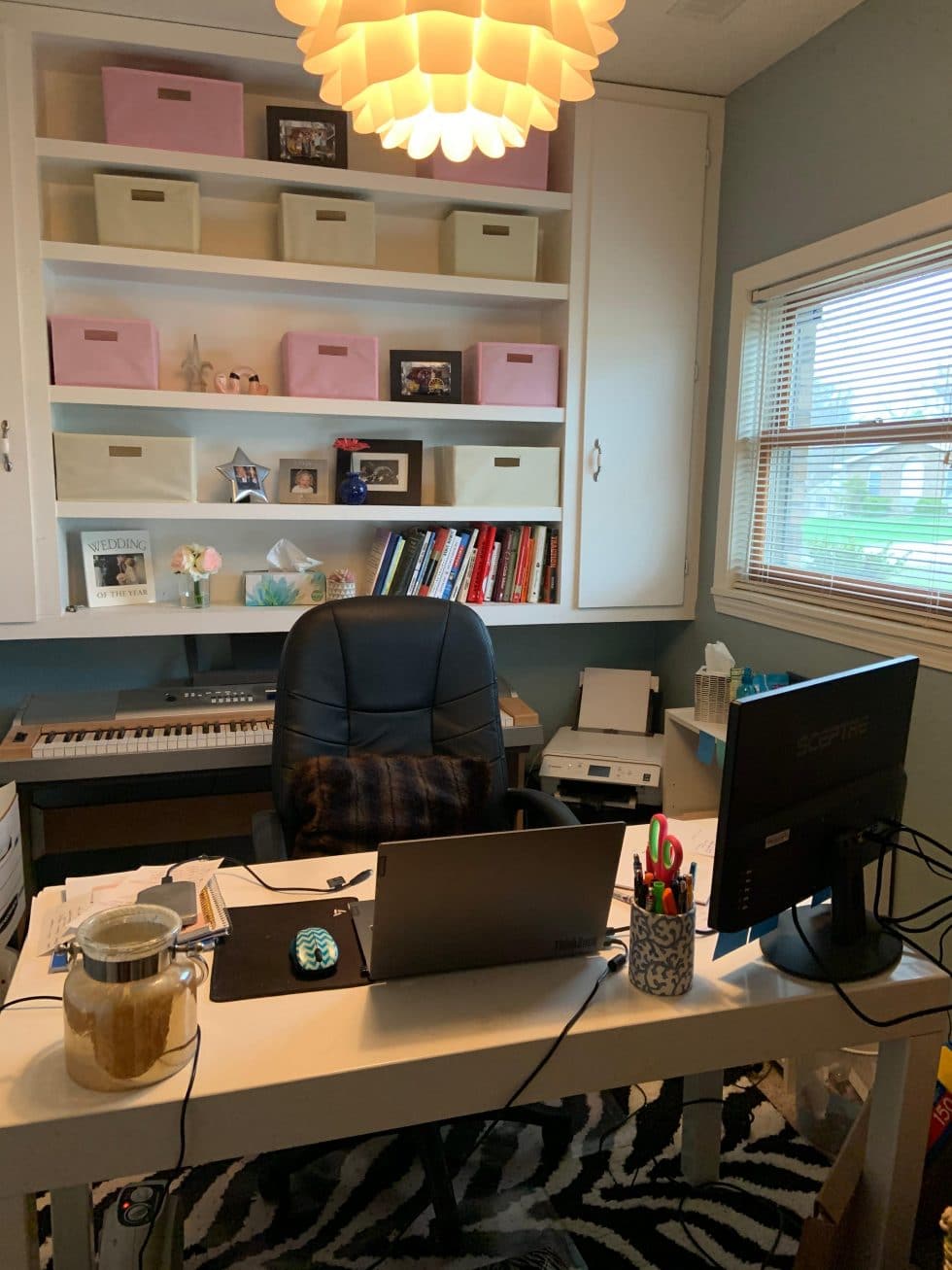
First things first, space matters! If you are new to having a home office, here are some tips in getting yourself set up for success from the beginning:

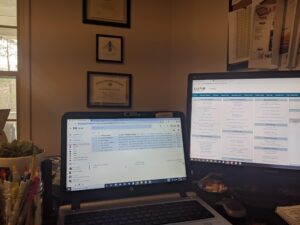
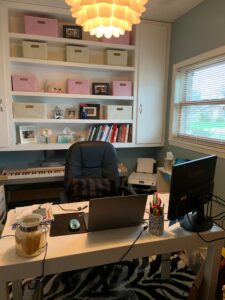
  • It’s important to create a space that can be entered in the morning and left at the end of the day, it helps maintain boundaries and work/life balance. The space in terms of your view or landscape is just as important! Natural light, a view outside, things on your desk or walls that motivate and inspire you truly help to keep the walls and solidarity of working from home from closing in! – Sara McEntyre, Director of Project Management

  • For me, setting up a separate space in the home has helped me to stay focused, in the zone, and less distracted. – Charlene Randall, Vice President, Strategic Accounts 

  • Location of where you work is key.  I set up my desk so I am looking out of windows and at other things that make me, a giant nerd, happy. – Heidi Garinger, Director of Client Services

    • Having a dedicated office space is key for me. It really gives me that feeling of going into the office. It also helps minimize distractions. My spouse and I both work from home and we each have our own office so we can really focus on the tasks for the day. – Linda Judd, Account Manager
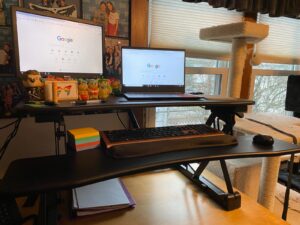
    • Standing instead of sitting and set an end of day time and stick with it if you can. – Lisa McGary, Director of Client Solutions 
    • Have a designated place to work. I have found that if I try to work from the same place that I watch TV or sleep, my work doesn’t get the same focus as when I work from my in-home office. – Sheila Danhoff, Project Manager

  • Pro tip from most of our employees – get yourself a monitor to connect to your laptop! 

Be on the lookout for our next blog post in this series coming next week!

Posts pagination

Previous 1 … 3 4
L&E Research

Focus areas

  • L&E Health
  • L&E Consumer
  • L&E Legal
  • CondUX.io

Capabilities

  • Participant Recruitment
  • Full-Service Research
  • Research Integrity
  • Research Infrastructure

Facilities

  • Chicago
  • Cincinnati
  • Columbus
  • Denver
  • New York City
  • Orlando
  • Raleigh
  • Tampa

Keep in touch

Subscribe to our newsletter

Linkedin-in X-twitter Youtube
  • © L&E Research
  • PRIVACY