L&E Blog Series: Working in a Virtual Environment – Communication
L&E Research
April 15, 2020
As many on our team have written about tricks to help your day-to-day strategy on working from home, in this blog post – I’d like to talk more about the overall company and its approach to working as a team. So for those leading teams, or even companies and are dealing with a virtual workforce for the first time in this new “normal,” I’m talking to you!
For many, this rapid transition from working in an office to working at home has led to a lot of challenges. I am sure everyone is quickly realizing that the things that were likely taken for granted when everyone was in one space are now “oh wow” moments that have presented new challenges to leaders as to how to get their teams to continue to be productive, as well as measuring effectiveness.
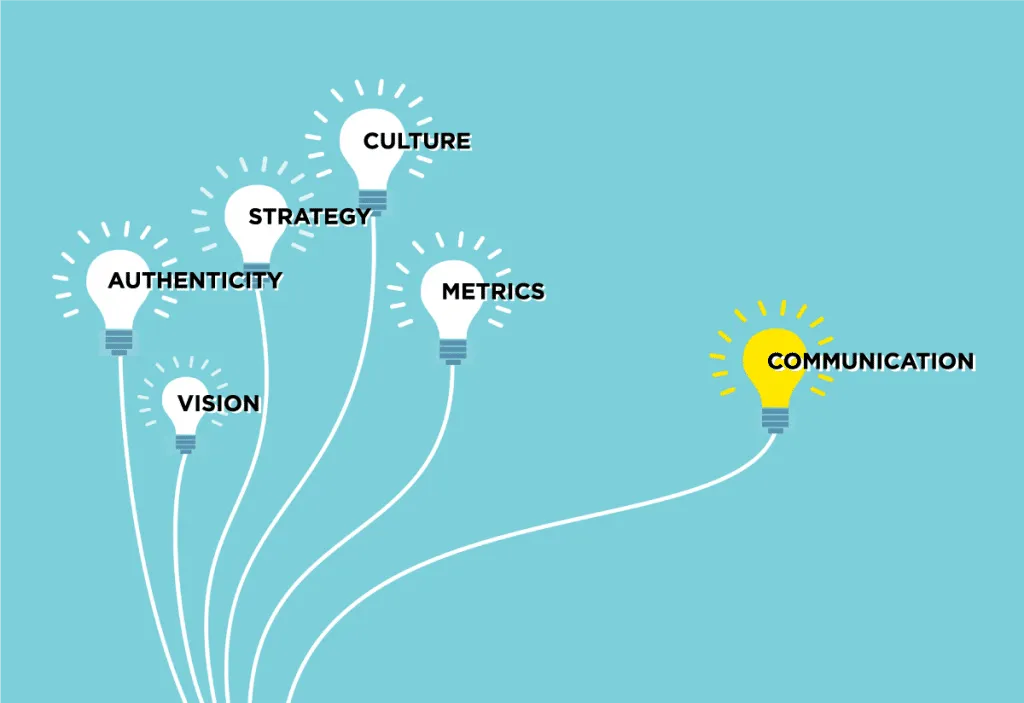
Prior to diving deeper into the challenges of the virtual workforce and building effective teams virtually, it’s important to highlight what all businesses must have throughout the organization to be successful: leadership. It took me years (and some embarrassing experiences) to realize leadership wasn’t speeches or “larger than life” personalities. Leadership is action that people commit to daily in order to inspire and comfort others, and this results in people’s comfort following their lead. While there are varied attributes, I have ascribed to the six following elements of leadership:
- Authenticity: I’ve been around orators, and I’ve been around people that might have said five words in a meeting. Some spoke with their hands, and some looked like they barely had a pulse. Leaders come in all different forms, but the key is authenticity, being true to themselves.
- Vision: knowing where one wants to go, what goals are to be set out and accomplished.
- Strategy: how do we intend to get there? What’s the plan?
- Culture: what are the common beliefs we all agree are the principles of our team? Many often use words like “integrity” or “compassion” or “teamwork”: noble principles, but don’t forget there was no integrity witnessed in “Wolf of Wall Street,” although they were a tightly bonded (and highly successful) team. And Blackbeard likely had little compassion for non-performers or those disloyal to him and his ship, but the loyalty of his men was notorious in those times. Culture is the environment that teams agree to embrace, and not tolerate from others that don’t embrace it. It’s also a big part of the language, the common reference everyone on the team understands.
- Metrics: humans perform as a result of the rewards they will receive for achieving those measures (and rewards come in many forms and aren’t always financial). Our ability to agree on what those rewards will be, and what each side (employer and employee) must do in order to earn those rewards, how to measure what a “great job” means, is critical.
Finally, the one I will focus on in this post is communication. If your team does not know what the vision is, the plan to get there, what we all agree are the rules and expectations, and how we all know when the journey will be successful…you don’t have anything. Simply put, ensuring the team knows what is going on is crucial, but probably the least thought out and most poorly executed within companies.
As a backdrop, when L&E made its transition to a virtual workforce in 2009, we shortly thereafter made our first expansion in Tampa, Florida. There were two main employees that were added to the team, and roughly 10 employees overall to our existing team of 30. My biggest surprise was discovering how often the team was having “miscommunications.” Balls were regularly getting dropped. Misinformation was as common as accurate information. The success of our new office was genuinely in jeopardy. Clearly, we had some problems to solve if we were going to succeed.
Fortunately, over 400 employees later, we did figure it out. For effective communications, we implemented 5 key tools to help us get everyone on the same page.
- Meetings: first off, let’s be clear that meetings are useless unless they are effective. You can learn all you want about effective meetings from “Traction” by Geno Wickman. I can’t endorse his business operating system highly enough. It’s a short read, and overall not an overly costly system to follow, even with outside help. But I’ll just share that the keys to effective meetings break down into 4 parts: they must have an agenda, they must require people are engaged (e.g. not doing email while they are meeting), they must have action items that result from the meetings (who’s going to do it, who’s responsible for it, and when’s it going to happen) and finally, they require a leader who is going to follow through and hold people accountable to those action items. If something is more intense, you may require greater meeting frequency, but for typical department operations, once a week I find works well, and must include what Wickman calls “cascading messages”: data that should either go outside the meeting to others, or sometimes messages that should be conveyed to the team prior to meeting start (which would be part of the agenda).
- Company surveys: good communication isn’t just about telling people things; in fact, it is more about listening to what others have to say. Sometimes it’s to better form strategies; sometimes it’s to get buy in, and sometimes, it’s because people need to talk, and a leader’s job is to listen, and to empathize with your teammate. But I find an annual survey (and I also like a short “pulse check” 6 months later) of how happy your team is, and finding out what they think would make the company better, is an instrumental tool in your listening tool kit. In time, assuming companies are acting on the survey, teammates will trust their leaders more. That leads to teammates thinking about how to make the company better more regularly: they’ll take ownership of the business and its outcomes. This goes a long way to having an engaged team, one that cares about the business and its success.
- Use a commonly accessible system where information can be stored. Don’t think emails out to the team are going to be effective forms of communication! Just like your inbox, your teammates email box is full of…emails! They get deleted, they get overlooked and sometimes even more crippling, they can lead to “reply all” conversations that don’t solve problems (in fact they usually create more). Email is the most overused, and most abused, and least effective, method of communication. Unless it’s a short response or confirmation of action, email should always be avoided.
Instead, use systems that can document and keep permanent record of the goals sought after. There are considerable systems online out there one can use to track and post content for teams to reference. Google docs and spreadsheets, Smartsheets, Microsoft has a full suite just to name a few, the point is to have a place where teammates can go when questions arise, what they should reference. And a “Wickman” rule I really like: document 20% that covers 80% of your business. But remember unlike your in-office days, no one can knock on your door to ask a quick question, and that absence of convenience (beyond the normal stress of what is COVID-19) is likely to result in more people not being productive. And if I can implore you to remember one thing, it is this: your team is stressed, and productivity is not going to be normal (both the new environment and stress): be patient! People will settle in, but it will take time.
- Regular “broadcasts.” Leverage tools like Zoom or GoToMeeting or others and once a quarter, talk to your team and answer their questions. Tell them what’s going on, share the vision, the strategy, emphasize the culture, and then answer questions. I also like to visit teams regularly. Despite having nearly a dozen offices, I visit them all at least twice a year. But with the current crisis, having the team SEE you, HEAR you, and watch you respond and answer their questions demonstrates your willingness to share, to listen and to engage. Your team needs that, which leads to my 5th communication key.
- Repeat yourself…a lot! A famous quote from a Fortune 500 CEO when asked what he spends most of his day doing, his answer was “repeating myself.” Remember what you said probably only a few people heard. Whether it was because they’d never heard you say it before, or because humans generally need several impressions for the message to stick, repeating yourself becomes an important strategy. And a hard lesson I had to learn: be consistent. I’d try to say the same thing, but use different words or analogies, convoluting the message (still struggle with this actually, working to be better!). Saying it the same way, focusing on the same key points (3 is recommended), reinforcing the message to everyone consistently and being concise is most effective in getting people on the same page and, working together.
And if after reading this you’re thinking “I don’t run my company or my department, so what can I do?” remember that you can be the biggest influencer of policy, as you are a member of the team. All of you have good leaders where you work: those leaders will not only need your support during this harrowing time, they’ll also be listening for good ideas that they can implement. This gets back to good communication: good leaders want to hear your opinions, just make sure you offer them the right way. That means you aren’t telling them, you’re sharing what you are seeing, how you care and want to see the company succeed and demonstrating respect for their position. In other words, you aren’t complaining, you’re problem solving. And another favorite word of mine, you’re being PROACTIVE. You want to help and you’re volunteering to help implement whatever strategies leadership decides to implement. As Mark Cuban says: “[People] who reduce my stress, become invaluable to me!”
One of the things I’m most proud of at L&E are our employee happiness measures that show over 4 in 5 employees would highly recommend working at L&E to friends and colleagues (as a comparison, most companies in the services industry according to the Society of Human Resource Management are in the 50s to low 60s). Good communication is critical to that end. And happy teammates are productive ones that embrace the company’s best interests. I hope this content has been helpful in creating a more effective virtual team in your organization.
Next time I’ll share what we have learned at L&E about metrics, and how to create measures that allow you and your teams to operative effectively, regardless of your location.