Visualizing research to make an impact – Practical tips for getting the most out of PowerPoint

When the large amount of information behind quality research is transformed into a story, the story needs to be complemented with high quality design to ensure it is optimized for client engagement.

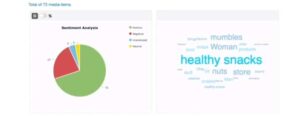
Visualizing data in quantitative research gets a lot of attention in the insight industry. But communicating qualitative insight requires the same level of attention to visual communication and design. It just comes in the form of (a lot of) words and verbatim, which need to be organized and structured into a well-designed visual representation in order to make an impact. From visualizing direct consumer quotes to Word Clouds, the design skills behind communicating qualitative research should be pushed.

Although PowerPoint is a common tool for creating insights reports, it is ultimately a design software, and this means that whoever uses it effectively becomes a designer. So, here are some design principles that you need to know in order to keep your insight presentation or report clear, professional and engaging.

Hierarchy 

Designers use different design elements to curate the viewer’s experience carefully. Hierarchy is the order in which the viewer sees each aspect of the design, so the eye’s path can be controlled by factors such as size, color and positioning. This allows the viewer to see the most important information, for example the title, or the key insight from your study, before anything else. The event flyer below shows how the design works to draw the viewer’s eye from one event detail to the next.

Alignment 

Imagine driving into a parking lot and finding that all the white lines indicating parking spaces had been removed. How would you know how to navigate the mess of parked cars to find your own space? The white lines turn the parking lot into a grid system, which creates a simple and effective experience for us. Our clients desire this same simple experience when viewing a qualitative research report. Alignment guides the positioning of shapes, charts and text according to straight lines, in a grid system, making it visually appealing to the audience, and easier for the client to see the key insights upfront. However, these straight lines don’t necessarily have to be at right angles – just make sure you are consistent with the angles of all features of the design.

Balance

The way you position and use elements of the design, such as text, images and color, affects the balance of the page or slide overall. For a clear and aesthetically pleasing design, the design of both sides of the page need to be equal, although this can be done both symmetrically and asymmetrically. A symmetrical balance is when both sides match identically across a center line, while an asymmetrical design is when the sides contain different design aspects but ultimately each side has the same weight (as shown below). For asymmetrical designs you might want to consider an object’s size, how close it is to the design’s center line, and use of texture and color to create the illusion of balance.

Contrast

Clever use of color will help to highlight important aspects of the design that you want to stand out and make an impact, like a powerful quote from a consumer. Using contrasting shades (e.g. yellow and blue) will catch the audience’s eye, while using more complementary or similar tones (e.g. two different shades of blue) will be less noticeable. In qualitative research this could be useful for insight boxes or quotes that you want to catch your client’s eye immediately.

These simple design tips work together with several other principles – such as white space (to make your insight easier to digest) and proximity (to help your audience understand relationships) – to help qualitative researchers visualize their research.

While qualitative research may not require the design of statistical charts like in quantitative research, communicating qual still requires a high standard of design outputs to keep clients engaged. Making sure your presentations and reports are consistent and aesthetically pleasing, and simple and easy to navigate, will help your insights communication hold maximum engagement and really make an impact.

If you want to know more about the techniques behind successfully delivering your insight to clients, from the art of storytelling to the technology to power it, check out our white paper on insight communications here.

The art of storytelling – The role of knowing your audience

A major part of creating actionable insights for clients is making sure we, as qualitative researchers, communicate research findings to them effectively – and a good way of doing this is through the art of storytelling. There are a number of elements that need to be considered to make sure your story makes an impact, including structure, timing and language, as well as the medium used to tell it. But all of these factors are subjective to your audience. As a market researcher, you know that understanding your audience is a key ingredient in marketing, but it’s also integral to the storytelling process in research; a non-tailored message will likely be ignored.

So, storytelling is an essential skill for the researchers of today. And clearly, before crafting your story you need to define your audience. Find out how much the people you are creating a report or presentation for know about your topic, and where there might be barriers present in their engagement. Ask yourself what team they’re on (are they a marketer or a market researcher or in IT?), what sector your client is in (automotive vs. finance), and how much experience they have (are they C-Suite or non-management?). Once you have a firm idea of who you’re communicating with and what they want to hear, you can think about how to tailor the story to resonate with them.

Good storytelling involves structure. The reality is that if your audience is in the C-Suite they’re going to be busy and will not be able to engage with every element of your story. In this case, you must make sure the essential takeaways are upfront, so carefully plan your structure to exclude any unnecessary details. CEOs should never feel overwhelmed by data and information, and instead should be presented immediately with the main findings – the insight that will inspire them to take action.

Your audience will also shape the language of your story. If your audience has little knowledge of qualitative research, they’re unlikely to understand any technical terms – so lose the jargon. Some of the technical specifics of research may also be lost when talking to client-side researchers and marketers, so instead, use clear and simple language to define your points. Use of language is especially important if you’re speaking to the C-Suite. Make sure to use their language, as they won’t have time to spare interpreting what you’ve said or asking questions later on.

Language also comes into play when you set the scene for your story. When speaking to clients from specific industries, like automotive or finance, try to tap into the language they speak. This effort to relate to your audience and provide a snapshot of their industry will suggest your expertise in the field and will help gain your client’s trust.

The medium used to convey your story is also dependent on your audience. Has the client asked for a presentation, a full report, or just a top-line summary? The key is to optimize the options at your disposal. If you’re doing a presentation, keep it short, and then provide a follow up document with more detail. If you’re doing a report, make sure to include a summary or an infographic.

But no matter who your audience is, you need to make sure they’re full engaged with the insight and what it means for them. This can be done by combining the insight or data with visuals such as infographics, photos and videos to provide grounding examples of reality that the audience can relate to. Visuals are important when communicating insight because large quantities of written information can be overwhelming and become meaningless. Small data is especially useful when communicating qualitative research; video in particular really brings the respondents to life and allows clients to understand their customers first hand. It brings clients right into the focus room, helping them to feel invested in the actual research, and really hear what their customers are saying.

So, when telling a good story, you need to ensure your message is suitably targeted so it won’t be given the cold shoulder. Knowing who you’re speaking to will allow you to design a story that uses an approachable language style, structure and form, and that is contextualized around what the audience already knows about your topic. Ultimately, we tell stories to encourage a response from the audience, and this is no different in research, where the goal is to deliver actionable insight right to the decision makers.

If you’re interested in learning more about building impactful communications through storytelling and finding the golden thread in the information, check out our white paper on insight communications or watch our recent webinar on this topic.

Renee’s Takeaways – Q2 Quarterly Roundup

1. Regarding sharing qualitative insights – When we share our insights with clients, we want to keep it fresh, and keep them engaged throughout our journey. We heard directly from our expert panel during our June webinar “Qualitative Analysis and Insight Communication” about their experiences, and things they’ve learned. Here are just a few –

  • Be sure to incorporate the use of multimedia to keep your presentation interesting.
  • If you can, put yourself in the consumer’s shoes. Immerse yourself in their experience, go through their exercise, walk through it the way they would. By doing this, not only do you have the data to share, but you have a unique perspective to share your insights.
  • Do not just plow through your insights! Take some time to consider the room dynamics, and be prepared to pivot on the fly based on that.
  • Use tools such as social media listening tools, and the like. These tools can help pour through thousands of reviews and analyze them quickly to get to some rich insights.
  • Try to dig deep into what the client already knows. That way, you are only delivering fresh insights, and not repeating what they’ve already heard.
  • Try seeing your clients as partners, and seeing them as part of the team. This creates a comfort level with asking questions that may seem uncomfortable.
  • Supply your client with leave-behinds, brochures, videos, things that get people engaged and can travel through the company on their own, after the presentation.

2. Regarding engaging with qualitative research study participants – We all know that participants like to be incentivized for sharing their opinions, and that is not going away any time soon! BUT, what we’re finding, is that there are many other reasons why people participate. They actually like sharing their opinions, most people do! They want to feel that what they’ve shared matters, and is contributing to bigger decisions being made about a product or service. So many others, stay tuned!

3. Regarding the IIEX Conference – I had the opportunity to attend the Insight Innovation Exchange in Atlanta in June. I saw some amazing presentations, as well as some new up and coming technologies for MR. Really exciting stuff!

4. Regarding recruiting and project specifications – Something that I’ve learned, many times over and over again, is to always have a plan B! We all want the perfect recruit, but sometimes it just doesn’t work out that way. It’s always a good idea to have your plan B from the very start. Take a good look at your specs and your screener, and try to anticipate where you might run into snags, and have your back-up plan in place to keep your recruit moving along smoothly.

5. Regarding feeding your brain! – Here at L&E, we have an internal learning system which is meant for both professional and personal enrichment alike. In the MR world, we need to be sharp in order to be the best partners to our clients. Here are a few things I learned from one of our recent modules –
• Maintaining an active social life can impact your brain’s health
• Taking the time to visit a new place, or read a new book will keep your brain engaged
• The food you eat affects your brain! Check out this quick video from a TED talk by Mia Nacamulli
• Exercise improves blood flow and oxygen to your brain
• And last but not least, something we all know, and can’t seem to get enough of, SLEEP!!

Until next time!

Your Research Design Engineer at L&E,

Renee Wyckoff

Renee’s Takeaways – Get the scoop on L&E’s Qual Analysis and Insight Communication Webinar!

6 Steps to Perfect Qual Webinar Series Summary

Step 4 and 5 – Qualitative Analysis and Insight Communication Webinar – Webinar held on June 6, 2018

It’s going to be hard to top this one!  In this recent webinar in our series, focusing on Qualitative Analysis and Insight Communication, we had the opportunity to chat with three extremely knowledgeable panelists on these topics. First up, Shaun Stripling who most recently left Mullen Lowe as Chief Strategy Officer, and was the Global Director of an insight consultancy called Frank About Women where she oversaw six countries of female-focused marketing efforts. Next, we had Walt Barron, Chief Strategy Officer at McKinney. Walt was a journalist in a previous life until he switched over to advertising about 19 years ago. He went to the VCU Brandcenter and has worked in agencies ever since.  Last, but certainly not least, Joan Lewis. Joan started out with Procter & Gamble, doing everything from upstream innovation to brand work and advertising in media, along with partnerships with retailers. Most recently, she’s been doing Boards of Directors work for a variety of for-profit companies, including three companies in the research, insights and analytics industry.  All of this experience in the industry totaling about 30 years!!

In this webinar, we focused on Q&A based around Qualitative Analysis and Insight Communication, tips to help make analysis easier for the researcher, and how to communicate insights to your clients in the most compelling and impactful way.

Here’s what our panelists had to say!

We started by asking our panelists to share about findings they’ve seen presented to them, as well as presenting findings to their clients.  What sticks, and what kind of approaches are most compelling.

  • Incorporate the use of multimedia to keep your presentation interesting
  • If you can, put yourself in the consumer’s shoes. Immerse yourself in their experience, go through their exercise, walk through it the way they would.  By doing this, not only do you have the data to share, but you have a unique perspective to share your insights.
  • Try to tug on the heartstrings if you can, make an emotional connection with the consumer. That, coupled with powerful data, and you’ve got a real one-two punch!

We heard some great things from our panelists as far as what works, so we thought it would also be helpful to find out a few things not to do, and what they’ve found doesn’t work!

  • Do not just plow through your insights! Take some time to consider the room dynamics, and be prepared to pivot on the fly based on that.
  • DO NOT ever give your client a large, printed out report, they will never read it! Try putting the insights that you’ve shared at the end of the report, at the beginning. You’ll find that most people will then come on the journey with you, because now, they are intrigued.
  • Don’t show 10 slides about your company background before getting to the insights. Save them for the end, and keep it minimal.

We covered some big picture items, then moved on to focus in on some of the smaller moving parts.  Next, we asked about useful tools that help bring data to life.

  • Assign pre-work. It can be a great way to jump past some of the necessary items you have to cover when you’re looking for consumer information and insights.
  • Use tools such as social media listening tools, and the like. These tools can help pour through thousands of reviews and analyze them quickly to get to some rich insights.
  • The use of video clips can enrich your story, hearing it directly from the consumer.

Next, we asked about best practices for delivering insights to clients.

  • Try to dig deep into what the client already knows. That way, you are only delivering fresh insights, and not repeating what they’ve already heard.
  • Maybe a little bit of a cheat, but write your hypothesis first. Then, either way, right or wrong, you’ll look for the data to prove it, and perhaps uncover some insights you didn’t expect.
  • Have a conversation about what disproved your hypothesis, if that is the case. What did you hear that forced you to rethink?

We shifted direction a little bit, and went on to discuss a very common problem in delivering insights, confirmation bias.  How do we reduce that effect with our clients?

  • Ask your client right up front for permission to probe “the sacred cows.” Are they okay with you digging a little deeper and asking them to help with the “whys.”
  • Try seeing your clients as partners, and seeing them as part of the team. This creates a comfort level with asking questions that may seem uncomfortable.
  • Find your partner, or ally in the company or whoever is helping bring the work into the company. Very often, they are the ones who want the company to be more insight driven.

And last, we asked what happens to a qualitative report once it’s released “into the wild?” What kinds of report content and format follow it through the organization?

  • Try to consider your presentation back to the client the beginning of the journey, instead of the end.
  • Create a plan at the start to carry the report through the organization, beyond a presentation.
  • Supply your client with leave-behinds, brochures, videos, things that get people engaged and can travel on their own.

We hope you found this summary to be helpful! If you didn’t register for this webinar you can listen to this webinar in its entirety, or download a free, transcribed version by clicking here.

Be on the lookout for our next webinar, which will be this fall. If you can’t wait until then, you can always view our on-demand webinars and learn about the latest technology solutions. Don’t forget to subscribe to our blog so you can keep up with what is happening at L&E!

Until next time!

Your Research Design Engineer at L&E,

Renee Wyckoff

6 Steps to Perfect Qual Series: Step 5 – Insight Communication | New White Paper from L&E

6 Steps to Perfect Qual

White Paper Download

Step 5: Insight Communication

Once you’ve completed your qualitative research, it’s crucial to communicate the results in a way that motivates clients and stakeholders to take action. So, how can this be accomplished?

This penultimate white paper of our series explains the importance of telling stories with your research, using a golden thread and impactful deliverables to make sure your message is engaging and easy to follow. Most importantly, the white paper includes practical tips to get the most out of tools such as PowerPoint, video and word clouds.

Learn how to:

  • Build impactful communications through storytelling (with practical advice on finding the golden thread in the information)
  • Different ways of communicating insight using technology
  • How to get the most out of deliverables such as PowerPoint

To continue reading, download our latest white paper by clicking here (no form to fill out).

Qualitative analysis: where do the humans bring value?

Robots replacing humans is a fear that has been increasingly dominant in the media in recent years.

The increasing presence of technology in everyday life and the decreasing need for humans in a variety of tasks has led to the fear that humanity will one day be rendered obsolete.

Although technology has been present in quantitative data analysis, especially big data analysis, for a number of years, it is now increasingly being used in qualitative research approaches too, because of developments that allow robots to process natural language.

Technology can help qualitative research by providing textual analysis, sentiment analysis, image and video analysis and voice recognition, leading to interview analysis.

But to what extent can technology take over the role of qualitative researchers?

Ultimately, what value do humans bring to the process?

The Speed Advantage Of Technology In Qualitative Research Approach

A major strength of technology based qualitative research approach is the speed.

Although humans are fully capable of analyzing qualitative data, they can’t compete in terms of pace.

Analysis completed by robots is therefore appealing when clients are looking for quick insights.

Moreover, although the initial investment in the required technology is expensive, spending fewer hours on a project will ultimately make projects cheaper.

This is always appealing for clients and will give the researcher that uses it an edge over competitors.

Why Human Empathy Remains Essential In Qualitative Research Approach

However, while robots can now understand language, they are certainly still unable to empathize.

As empathy is crucial for successful market research, technology’s role is therefore limited.

In fact, using fast-paced machines to analyze the data is actually helpful.

The less time researchers spend analyzing data themselves, the more time they have to empathize with the respondents’ feelings.

It is this “system 2” thinking that ultimately delivers high-quality results to clients because it allows researchers to see the world through the eyes of the consumer.

Humans should utilize their strengths as great thinkers and collaborate with machine analysis to achieve the best results.

Reducing Bias Through Technology In Qualitative Research Approach

Moreover, although researchers aim to be objective, using machines reduces the risk of unconscious bias, which is crucial in providing accurate and actionable insights for clients.

However, although machines may not have prejudices, their general accuracy can still be questioned.

Although their understanding of natural language has improved, it still does not meet human standards.

Their ability to understand language traits such as humor and sarcasm, while contextualizing meaning, is still limited.

Likewise, machines can be over enthusiastic to categorize data when it may not fit under a specific label, a problem that is specifically relevant during sentiment analysis.

Humans on the other hand are more flexible, and can make judgement based on specific situations, rather than making routine decisions based on programming.

Admittedly, the sometimes tedious process of data analysis can lead to errors from humans too.

However, humans are definitely required in the analysis process, even if merely as quality control.

The Human Element In Qualitative Research Approach

Although technology has a clear place within qualitative research approach, we ultimately complete market research, both quantitative and qualitative, to understand people so that clients can meet their requirements with products and services.

It’s therefore important that humans remain present in the process and are not distanced from dealing with the data.

This is especially crucial because researchers’ knowledge of language, their flexible judgement and their ability to think, feel and empathize adds a value that machines cannot currently provide.

When humans and robots work alongside each other, utilizing each other’s strengths, the results will be the most successful and deep, actionable insights will be delivered to clients.

Ready To Enhance Your Qualitative Research Approach?

At L&E Research, we combine advanced technology with deep human insight to deliver comprehensive qualitative research results. Our experienced researchers understand that the best approach leverages both AI efficiency and human empathy to uncover actionable insights.

Contact us today to discuss how our qualitative research approach can provide the insights your business needs.


6 Steps to Perfect Qual Series: Step 4 – Qualitative Analysis | New White Paper from L&E

6 Steps to Perfect Qual

White Paper Download

Step 4: Qualitative Analysis

To get to the heart of qualitative analysis, you need to dig deep, as well as scope the bigger picture, to provide actionable insight for the client to address the problem.

This next L&E trust guide sets the scene for the current scale of qualitative data, and offers research consultants a way to grasp the large amount of information by using the latest thinking and technology.

This paper will guide research consultants through the process of qualitative analysis to capitalize on scale, reach, cost, depth and speed. In this paper you will find:

  • Practical tips in categorizing and structuring data
  • The technology used to speed up the analysis stage
  • Support from L&E and technology partners

To continue reading, download our latest white paper by clicking here (no form to fill out).

Webinar | 6 Steps to Perfect Qual- Steps 4 & 5: Qualitative Analysis & Insights Communication

6 Steps to Perfect Qual – Free L&E Webinar Series (available via on-demand)

On June 6, 2018, L&E hosted our third webinar in our “Six Steps to Perfect Qual” webinar series for 2018 with Joan M. Lewis, Shaun Stripling and Walt Barron as our panelists. The focus was on steps 4 & 5: qualitative analysis and insights communications.

Guest Speakers: 

  • Joan M. Lewis, Former P&G Insights Director & Independent Advisor and Consultant 
  • Shaun Stripling, SVP, Chief Strategy Officer and Global Director of Frank About Women at Mullen
  • Walt Barron, Chief Strategy Officer, McKinney

Putting together qualitative analysis and communicating qualitative insight can seem a daunting process, so we wanted to offer you the latest techniques and best practices for telling strong stories and engaging clients with impactful deliverables.

Our third webinar will guide you through the best methods to ask questions and get actionable next steps to lead your clients to true insight. We will discuss the impact of powerful communications through a combination of the latest technology and practical tips for storytelling and creating actionable deliverables.

In this webinar you’ll learn how to:

  • Build impactful communications through storytelling (with practical advice on finding the golden thread in the information)
  • Different ways of communicating insight using technology

Is machine learning getting to grip with sarcasm? Sentiment and Semantics

It’s no secret that qualitative data is harder to analyze than quantitative. The replacement of ticked boxes for a plethora of data from verbatim, videos, group conversations and observations means that participant answers are vastly more time consuming to categorize. Not only this, but the context and motivations of the individuals need to be considered in addition to their responses and behaviors. But the effort is worth it; you can work to really understand consumer behavior and get to the ‘why’ behind the ‘what’.

Of the many techniques used to analyze qualitative information, sentiment analysis and semantic analysis are two we often come across. These provide insight into the data by looking at attitudes and themes. And as new technology continues to make its way into qualitative analysis, we need to understand how it can impact these two methods of analysis, and how it can help develop more meaningful insight.

As a reminder, sentiment analysis categorizes language based on opinions, often checking for a positive or negative viewpoint. This can include, for example, the views of consumers expressed on social media or online communities toward a specific product, idea or service. Although this deep analysis can be done by humans, it is quicker using technology – most often machine learning. Machine learning is helpful in analyzing large quantities of information and making judgements based on language that would be far too time consuming for researchers.

However, it’s important that sentiment analysis is not entirely reliant on technology. We are often asked to analyze data in a binary way, but the expressed sentiment is rarely that black and white. Technology often makes assumptions about the sentiment of a response to make it fit a binary format, while humans would be more cautious to force content into a category. Moreover, while humans can contextualize written language and understand colloquialisms and contradictions, as well as turns of phrase and humor such as sarcasm, machines struggle with this. Machines simply cannot understand all the nuances of language and its grammatical patterns to the same accuracy that a human can. In spite of the claims of some of the technology providers, we are far off being in a place where text can be analyzed by a machine as well as by a human. It is therefore important to use a joint approach to sentiment analysis; machines may make things quicker, but they’re also more likely to create inaccurate data through generalization, lack of contextual knowledge and a lack of natural language skills.

Semantic analysis, on the other hand, generates meaning by grouping together the themes in qualitative data. It is often referred to as topic or keyword analysis. This is an important approach when trying to understand the important subjects in the field of study, regardless of how a participant feels about them. This is often useful in the early stages of a research project, when exploring a broad idea and looking into other relevant and more specific ideas that need to be examined further. As with sentiment analysis, this can easily be done by a computer, and indeed, it is far more efficient to do so, leaving the researcher with more time for deeper analytical thinking. Furthermore, a machine learning process can take place with no prior knowledge of the documents – again saving time. However, there are limitations, as the grouping of themes needs to go beyond basic classification to give a meaningful representation of the qualitative information.

So machine learning speeds up sentiment and semantic analysis; for text based analyses this can open up a whole new world of information about consumers from social media, communities, and other online resources. The tech guys are working hard to solve the nuances of language such as sarcasm – machine learning’s biggest barrier in sentiment analysis. And then with semantic analysis comes the challenge of context – such as the ability to distinguish Mars the chocolate bar from Mars the planet. Technology is certainly getting closer to solving these problems, but in the meantime, it’s nice to keep the humans around.

For more on qualitative analysis, download our white paper here.

Renee’s Takeaways – Get the scoop on L&E’s Qual Research Recruiting Webinar!

6 Steps to Perfect Qual Webinar Series Summary

Step 2 – Qualitative Research Recruiting Webinar – Webinar held on April 11, 2018

Let’s add another webinar filled with great information to the books!  In this webinar in our series, we focused on Qualitative Recruitment and got to spend some time with three experts in our industry.  First up, Teressa Johnnson, Director, Sensory Science and Technical Support at The Wendy’s Company.  Next, Heather Hall, Vice President of Project Management at Illumination Research.  And last but not least, our very own Brett Watkins, CEO and President of L&E Research.

In this webinar, we focused on Q&A based around Qualitative Recruitment, tips to help your recruiting go as smoothly as possible, and also help ward off any issues before they become issues starting with the design process.

Here’s what our panelists had to say!

1. We started by asking about kicking off a new project with a recruiting partner.  What might our panelists be able to share with an amateur researcher in regards to getting recruiting started off on the right foot?

  • Partner, partner, partner! You want to be sure to work with recruiting companies who not only care about helping YOU be successful, but who also align with your core values. In any good relationship, personal or business, communication and honesty are key elements to be able to have a true partnership.   In the end, you’ll want to be sure that you can trust your partner to do what is best for your project.
  • Be clear about your expectations for the recruit right from the start! Have a discussion about who your ideal respondent is. Ask your recruiting partner if they have any past experience with the population you are trying to reach, and if they can offer and advice on the best ways to reach them.
  • Ask your recruiting partner what their plan is to find your population. If plan A does not work, what’s plan B?  Having this mapped out at the beginning, will help keep your recruiting from getting hung up, and keep the process moving along.

2. Next we discussed what might be at the top of our panelist’s checklist when kicking off a new project.

  • Be sure that your recruiting partner is fully aligned with you! Make sure you are crystal clear on who you really want for your research.  This will help eliminate issues down the line.
  • Have a kick-off call! Extremely important to have a kick-off call with your recruiting partner before getting started.  In the age of email, some things may be uncovered in a phone call, that was not communicated in the email thread.  This is a good time for both parties to ask questions, gain clarification, brainstorm, etc.

3. We also touched a little bit on screener development.  What do our panelists always work into their screeners?

  • False, or catch questions. Ask about product usage, and include a few items in a list that do not actually exist.  If a potential respondent answers yes to using any of the false products, TERMINATE!
  • Include your plan B right in the screener! If you anticipate that a question may not work, or may be a sticking point, make your plan B known from the start as to not hold up recruiting.
  • Be careful of the way your questions are worded. It’s easy for a question to be interpreted by different people in different ways.  It’s extremely important to be sure that your questions do not have multiple ways they can be interpreted.  Let someone else on your team put their eyes on it, even take it for a test run if time allows.

4. Touching on recruiting partnerships again, we asked our panelists what some of their must haves are in a recruiting partner.

  • Communication is key. Over communication is even better!  Keeping the client in the loop, and always informed about what is going on with their recruit.  If they are anticipating issues, let the client know, and even come to the table with some suggestions on what can be done to keep the recruit moving right along.
  • Timely updates. A partner who understands that no news makes the client anxious!  All ties in with the above, and if there is an issue, knowing about is sooner than later is best to be able to stay on top of it.

5. Along the same vein, we asked our panelists what the best service is that their recruiting partner can provide.

  • Once a project is kicked off, get started quickly! If recruiting gets started quickly, you can have a gauge early on how the recruiting is going, and be able to identify any issues sooner rather than later.
  • Be honest about feasibility! Work with a partner who does their homework up front, and can let you know, with certainty, if they can recruit the population you are after. If they cannot, they should come to the table with what they CAN do.
  • A solid database. It’s helpful if a recruiting partner’s database holds a lot of preliminary information about potential respondents.  This way, you can focus on the meat of the recruit, and get the demographics and such out of the way up front.

6. One question I think we all ask now and then is how we avoid some of the common issues that may arise with recruiting.  Is there anything that can be done during the design process in order to get the most authentic participants?

  • Blind recruit. Set up your screener to hide the topic, but as mentioned earlier on, include the red herring questions.
  • Re-screen on-site. If someone was not truthful during the screening process, they will likely not remember how they answered if screened again.
  • Work with a recruiting partner who uses technology to track things such as past participation, participant behavior, etc., so you are able to weed out non-qualifying participants early on in the process. Also a partner who is always working to grow their database to ensure fresh participants.

7. New technology and recruiting.  What do our panelists think about it, what do they like, and what are some things that need to be overcome when working with it?

  • Online research. You can reach a lot of people who you may not have been able to reach before, expand your reach. One of the issues with this are bots, and how they can mimic human behavior to answer questions.  Better technology could be put in place to help with that.
  • Webcams can give us some great insights into consumer behavior, and that can work alone as the sole methodology. It’s even better when you can use it prior to groups or interviews to get the conversation started before the respondents even arrive on-site.

We hope you found this summary to be helpful! If you didn’t register for this webinar you can listen to this webinar in its entirety, or download a free, transcribed version by clicking here.

Be on the lookout for our next webinar, which will be this summer. If you can’t wait until then, you can always view our on-demand webinars and learn about the latest technology solutions. Don’t forget to subscribe to our blog so you can keep up with what is happening at L&E!

Until next time!

Your Research Design Engineer at L&E,

Renee Wyckoff